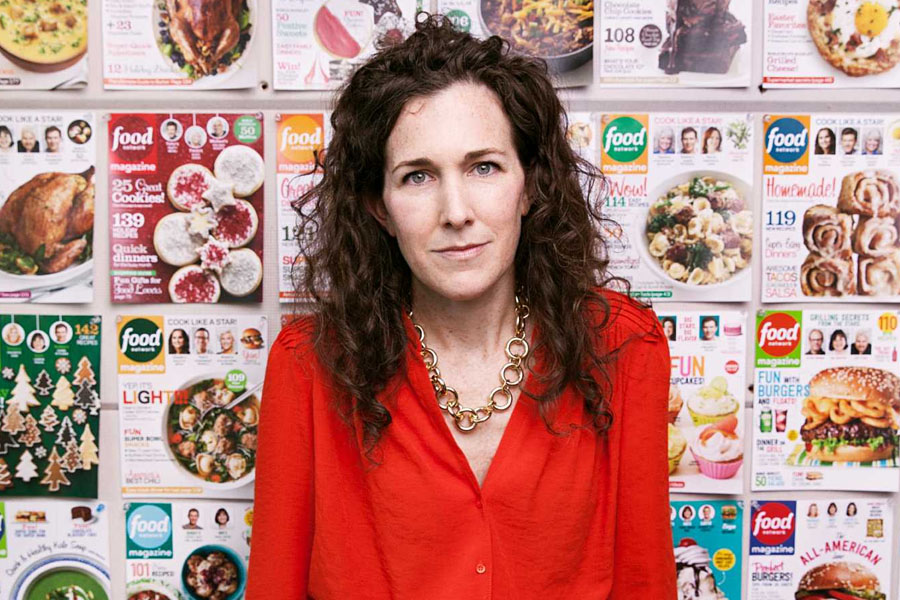
A newsroom beginning with a culinary heartbeat
I see Maile Carpenter as the kind of editor who did not arrive at food media by accident. Her path feels stitched together from two strong threads, writing and cooking, and those threads meet cleanly in her public career. She first built herself in journalism, working in newspapers and magazines before becoming one of the most recognizable names behind modern food publishing. That blend matters. It gives her work a sharp edge and a warm center, like a knife with a polished wooden handle.
Carpenter grew up in a family that moved often because her father, David Carpenter, was an Air Force major. Her mother is Sandy Carpenter, and she is one of three daughters. That detail matters because constant movement often teaches a person how to adapt quickly, how to read a room, and how to make a home out of change. Those traits show up in her career. She moved from one media setting to another with the ease of someone who knows how to find a footing anywhere.
She studied journalism at the University of North Carolina at Chapel Hill, and later added culinary training at the French Culinary Institute, now known as the International Culinary Center. That combination gave her an unusual perspective. She could write like a reporter and think like someone who understands the kitchen from the inside. In 2002, she won a James Beard Award for magazine feature writing, which marks an early public sign that her voice was already cutting through the noise.
The rise of a magazine builder
Maile Carpenter is best known for helping launch Food Network Magazine in 2008 as its founding editor in chief. That is the kind of assignment that looks simple from far away and feels colossal up close. Building a magazine from the ground up requires instinct, stamina, and the ability to balance the practical with the playful. Carpenter helped shape a title that became a giant in the food media world, eventually reaching millions of readers and becoming one of the most widely read food magazines in the country.
Her work did not stop there. She later took on editorial leadership connected to The Pioneer Woman Magazine, ThePioneerWoman.com, and HGTV Magazine. That broad role suggests a particular skill set, not just editing words, but guiding brands, tone, audience, and visual identity. In food and lifestyle publishing, that is a balancing act. The magazine must feel generous but not sloppy, polished but not cold, useful but still fun. Carpenter’s career suggests she understood how to tune that instrument.
I think one reason her editorial work stands out is that it lives at the intersection of aspiration and accessibility. Food media often risks becoming either too elite or too ordinary. Carpenter helped shape a space where recipes, stories, and images could feel inviting without losing ambition. Like a well-set table, her work seems designed to make people stay.
Her achievements also include the long-term success of Food Network Magazine as a commercial force. It grew into a major monthly title with enormous reach, and that scale is itself a form of achievement. In publishing, longevity is not luck. It is repeated proof that the audience keeps coming back.
Family life, marriage, and the public shape of a private world
Married to chef Wylie Dufresne, Maile Carpenter’s personal life is strongly tied to food. Relationship provides her story symmetry. She writes, edits food media, and lives with a celebrity chef. Their relationship is sometimes called a culinary power couple, not because of glamour but because both occupations revolve around creativity, pressure, and taste.
This marriage began in 2008. Sawyer and Ellery Dufresne are their daughters. Those names appear in public profiles as part of Carpenter’s family, adding to his profile beyond the magazine header. She is more than a national editor. She manages deadlines, kitchens, school schedules, and family routines as a mother.
His innovative, boundary-pushing manner makes Wylie Dufresne a key figure in modern American food. Thus, Carpenter’s home life may be shaped by food as a daily texture rather than a branding notion. Creative energy may be found in meals, conversations, and events that most people associate with restaurants and editorial pages. A well-edited magazine spread may reflect her professional world, while her family life is a bustling kitchen with action, aroma, and overlapping voices.
Dewey Dufresne, her father-in-law, is also involved. Public mentions link him to the family story and the Lower East Side sandwich shop BYGGYZ. Carpenter’s life revolves around military discipline, journalism, high-end cooking, and family life. That mix is rare. The layers make her biography like a dish in phases.
Recent visibility and ongoing public presence
Carpenter remains prominent after years in editorial leadership. She still claims to be Food Network Magazine, HGTV Magazine, and The Pioneer Woman’s editorial director on social media. Her internet presence emphasizes consistency, not innovation. She continues to discuss cuisine, family, and lifestyle media.
Recent mentions demonstrate her continued interest in reading and eating. She has worked on children’s cookbooks and lectured on food media, trends, and recipe discovery in public and podcasts. That matters because food publishing has changed drastically. Print no longer stands alone. It joins music, social media, video, and short-form digital culture. Carpenter engaged with such developments rather than rejecting them.
This is impressive. Changes in media make many editors historical footnotes. Carpenter seemed to have adapted without losing herself. She still wields editorial power, but with curiosity and practicality.
Timeline of a career built in layers
Her timeline begins with early writing instincts in childhood, then moves through journalism education, newspaper work, and magazine jobs in the 1990s. By 1999, she had completed culinary training. In 2002, she earned major recognition for magazine feature writing. In 2008, she became founding editor in chief of Food Network Magazine, the defining launch of her public career. Later, she expanded into other editorial leadership roles tied to lifestyle and home brands. By the 2020s, she was still visible through books, interviews, and social media, showing that her influence remained active rather than frozen in the past.
That arc matters because it shows how a career can grow without turning brittle. She did not simply become a magazine editor. She became a bridge between food writing, media strategy, and family life. That is a much richer story.
FAQ
Who is Maile Carpenter?
Maile Carpenter is a journalist, magazine editor, and culinary media executive best known as the founding editor in chief of Food Network Magazine.
Who is Maile Carpenter married to?
She is married to chef Wylie Dufresne.
Does Maile Carpenter have children?
Yes. She has two daughters, Sawyer Dufresne and Ellery Dufresne.
Who are Maile Carpenter’s parents?
Her mother is Sandy Carpenter, and her father is David Carpenter, who served as an Air Force major.
What is Maile Carpenter known for professionally?
She is known for helping launch Food Network Magazine, leading editorial work tied to The Pioneer Woman and HGTV Magazine, and building a major presence in food and lifestyle publishing.
What is Maile Carpenter’s background?
She studied journalism at the University of North Carolina at Chapel Hill and later studied culinary arts at the French Culinary Institute, giving her a rare mix of newsroom discipline and kitchen knowledge.
Has Maile Carpenter received major recognition?
Yes. She won a James Beard Award for magazine feature writing and has been publicly recognized for her leadership in food media.
Is Maile Carpenter still active publicly?
Yes. She continues to appear in food media, books, and social media, and she remains associated with editorial leadership in the lifestyle and food space.