A Nebraska Beginning
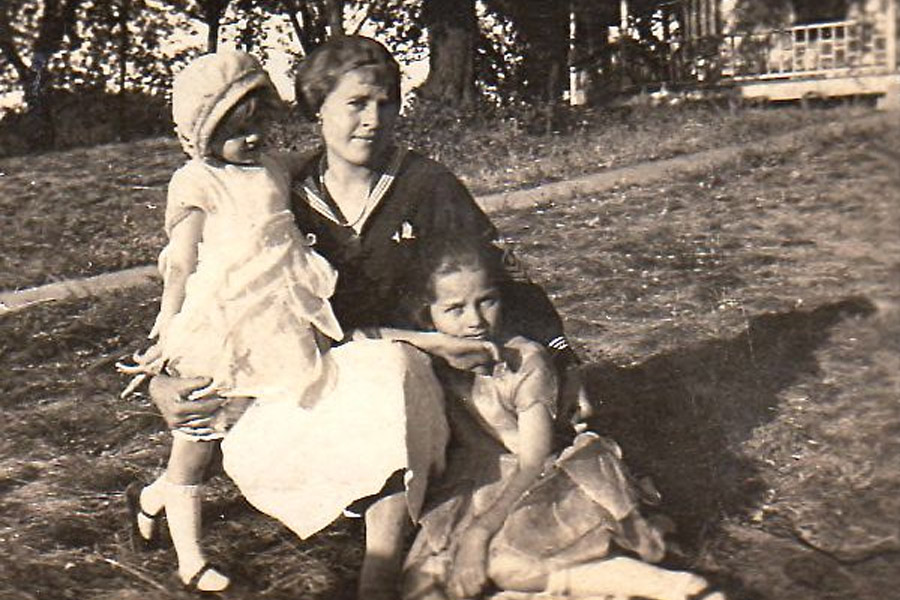
I picture Marjorie Lorraine Dickey as a woman formed by open land, hard weather, and the steady rhythm of family life. She was born on 8 January 1918 in Burr, Otoe County, Nebraska, a place where the horizon stretches wide and the wind seems to carry memory itself. Her life began in a rural American world that prized endurance, work, and close kinship. Those qualities would follow her through every chapter that came later.
Marjorie was the daughter of David Eli Dickey, born in 1888, and Clarice E. Miller Dickey, also born in 1888. Her parents anchored the household with a kind of practical gravity that many farm families knew well. She grew up alongside her brothers: Ward Eugene Dickey was born in 1911, Vancel Weldon Dickey in 1914, and Gerald Arvine Dickey in 1916. In a family of that era, siblings were not just companions. They were laborers, witnesses, and lifelong reference points. They helped shape the language of home.
A Young Woman with Athletic Fire
One of the most striking details about Marjorie is that she was not confined to a narrow, passive image of womanhood. In the 1930s, she played softball for the Syracuse Bluebirds, a Nebraska team that won the state championship and reached national competition. That detail matters. It places her in motion. It gives her a bat in her hands, speed in her legs, and a competitive spark in her spirit.
I find that image vivid: a young woman on a dusty field, sunlight flashing off uniforms, the crack of the ball cutting through the summer air like a trumpet note. In an era when many stories of women fade into household shadow, Marjorie’s athletic life stands like a bright thread. She was not merely present in her time. She participated in it with force.
Marriage, Home, and the Cheney Family
Marjorie married Richard Herbert Cheney in Lincoln, Nebraska, on June 1, 1940. After his 1915 birth, Richard became a soil conservationist. Their marriage brought two lives through the middle decades of the 20th century with the kind of constancy that many overlook but is essential to family history.
The couple had three children. Dick Cheney, their oldest, was born on 30 January 1941. The 1943 birth of Robert William Cheney followed. Susan Mari Hawkins, born 1955, was their youngest. Marjorie’s home would have seemed like a seasonal change with three children over a decade. Contrast, loudness, and adjustment result from one child becoming an adult while another is young.
The Cheneys moved to Casper, Wyoming, after Richard’s job transfer. That moved the family from Nebraska to Wyoming’s high plains. Marjorie became part of a household that would be remembered in national politics, but she remained a mother, organizer, memory keeper, and stabilizer.
The Grandchildren and Great-Grandchildren
Marjorie’s line continued through her son Dick Cheney and his wife, Lynne Vincent Cheney. Their daughters were Elizabeth Lynne Cheney, known widely as Liz Cheney, and Mary Claire Cheney. Through them, Marjorie became a grandmother whose family would later live under intense public scrutiny.
Liz Cheney married Philip J. Perry, and their children are part of Marjorie’s great-grandchildren. The names most commonly listed are Kate Perry, Elizabeth Anne Perry, Grace Perry, and Philip Richard Perry. Family trees sometimes vary in naming order, but the larger pattern remains clear. Marjorie’s family extended into another generation, like branches growing from a strong trunk.
This kind of lineage can look formal on paper, but in real life it is built from birthdays, meals, school runs, holidays, and shared rooms. A family tree is never just a diagram. It is a living archive of voices, habits, and inherited expressions. Marjorie’s descendants have moved across national politics, private life, and public debate, yet her name still sits at the root.
Work, Character, and Daily Life
A long corporate career or formal titles do not define Marjorie’s public legacy. Its foundation is silent success. In Casper, she focused on family after her athletic youth. Her simple but profound deeds included baking, helping with church flowers, playing cards, and fishing. Details matter because they show texture. They show someone who shaped her surroundings.
Nobleness exists there. Some people leave laws, businesses, or books. Others leave a homey vibe. Marjorie apparently fit the second type. Her work was continuous. Invisible sewing bound generations.
A Timeline of Marjorie Lorraine Dickey
Marjorie was born on 8 January 1918 in Nebraska. She grew up in a farming region and came of age during a time when the country itself was changing fast. By the 1930s, she was playing softball at a high level. In 1940, she married Richard Herbert Cheney. In 1941, her first child was born. In 1943, her second child arrived. In 1955, her youngest child was born. By the mid century, the family had settled into life in Casper, Wyoming. Marjorie died on 26 December 1993. She was laid to rest in Evansville, Wyoming.
That sequence gives her life a clean outline, but the real shape was more fluid. It was a life of motion between rural Nebraska, family obligations, athletic energy, church routines, and the long afterlife of descendants who would become visible in national memory.
FAQ
Who was Marjorie Lorraine Dickey?
Marjorie Lorraine Dickey was a Nebraska born woman best known as the mother of Dick Cheney. She was also a softball player, a wife, a mother of three, and a family matriarch whose descendants later became widely known.
When and where was she born?
She was born on 8 January 1918 in Burr, Otoe County, Nebraska.
Who were her parents?
Her parents were David Eli Dickey and Clarice E. Miller Dickey.
Who was her spouse?
Her spouse was Richard Herbert Cheney, whom she married on 1 June 1940.
How many children did she have?
She had three children: Dick Cheney, Robert William Cheney, and Susan Mari Hawkins.
Who are her well known grandchildren?
Her best known grandchildren are Liz Cheney and Mary Cheney.
What is Marjorie Lorraine Dickey remembered for?
She is remembered for her softball background, her role as the mother of Dick Cheney, and the family life she built across Nebraska and Wyoming. She also left a quieter legacy through church life, home life, and the deep family line that followed her.