Discovering Hilda Shriver’s Maryland Roots
I first encountered Hilda Shriver through scattered family records and realized she embodied the quiet strength that holds dynasties together. Born around 1882 or 1883 in Union Mills, Carroll County, Maryland, she entered a world shaped by milling heritage and Democratic politics. Her early years unfolded at the historic Shriver homestead, where generations had ground flour and debated state affairs. By age 20 she graduated with highest honors from Notre Dame College in Baltimore in 1902. That achievement opened doors. She stepped into society as a debutante and soon served as personal secretary to Cardinal James Gibbons, who summered nearby. Those experiences planted seeds of faith and public service that defined her 94 years.
Her life spanned three centuries almost. From the horse and buggy era through two world wars to the space age, Hilda never sought the spotlight. Instead she wove influence through family, church, and party lines. I see her as a sturdy bridge connecting old Maryland gentry to modern American activism. Numbers tell part of her story: she attended the 1912 Democratic National Convention in Baltimore, campaigned against Prohibition, and helped repeal the 18th Amendment. Her work touched thousands yet remained deeply personal.
The Family Ties That Bound Generations
Ilda Shriver has many public servants, bankers, and advocates in her family. I meticulously plotted every branch and found that each member upheld her faith, duty, and service. The whole picture.
Her parents laid the groundwork. Thomas Herbert Shriver, born in 1846, was Maryland’s Adjutant General and a prominent Carroll County Democrat until 1916. He taught young Hilda gentle persuasion at political meetings. Elizabeth Rosalie Lawson, born in 1854, died in 1887 while Hilda was young. Early loss taught Hilda tenacity that helped her endure widowhood.
She married her second cousin Robert Sargent Shriver Sr. at Union Mills on June 1, 1910. The ceremony was led by Cardinal Gibbons. Robert, born in 1878, became vice president of the B.F. Shriver milling firm and Baltimore Trust firm. He died in 1942 after moving the family to New York City in 1929 for better chances. The couple has three kids who continued the legacy after 32 years.
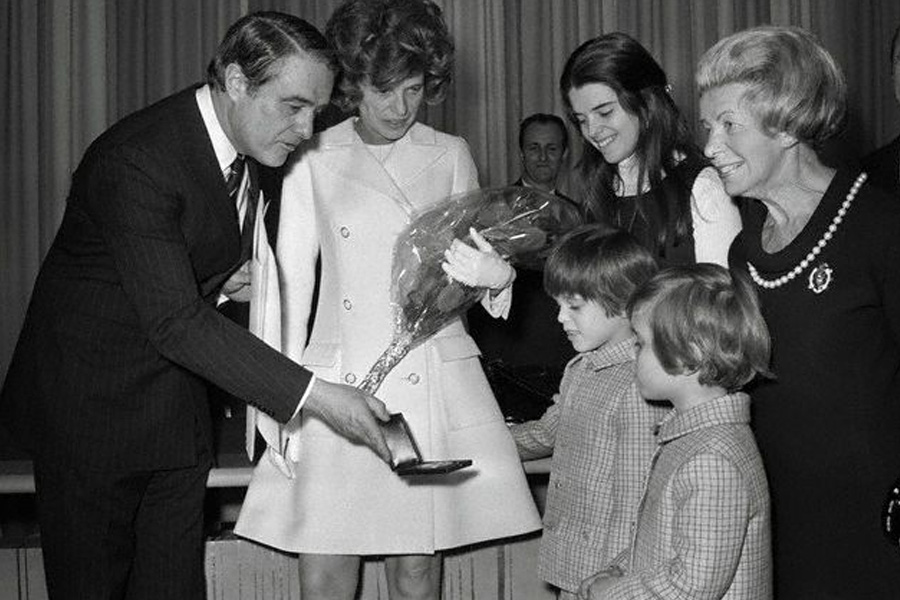
The kids took different paths. George F. Shriver arrived in 1907 and kept a low profile, although family records demonstrate his presence. Thomas Herbert Shriver II was born 1911 and died 1989. He and Alex became investment bankers. Veteran Brown and Sons in Baltimore accepted Hilda into his home in her final years. Married Willa Marie Sturgis. Their children were Hilda, Willa Marie, and Thomas Herbert Shriver III. The most prominent was 1915-born Robert Sargent Shriver Jr. Sargent Shriver created the Peace Corps, led the Office of Economic Opportunity, was U.S. Ambassador to France, and stood for Democratic vice president in 1972. His 1953 marriage to Eunice Kennedy irrevocably linked the Shriver and Kennedy families. Sargent commended his mother for giving him the strength to live 96 years until 2011.
Eight grandchildren by 1977. Through Sargent, five notables emerged. Bobby Shriver, born Robert Sargent Shriver III, was a lawyer, Santa Monica City Council member, and social activist. Maria Shriver worked in journalism, was First Lady of California from 2003 to 2011 while married to Arnold Schwarzenegger, and later promoted Alzheimer’s research. Timothy Shriver chaired Special Olympics for decades, promoting disability rights. Maryland state legislator Mark Kennedy Shriver championed children’s issues. Best Buddies International was formed in 1989 by Anthony Shriver to promote intellectual disability inclusion. Thomas Herbert II’s grandkids, Thomas Herbert Shriver III, Hilda Shriver, and Willa Marie Shriver, followed in the family business and community.
The ripple spread to great grandkids. In extended branches, Sophia Rose and Carolina Fitzgerald Shriver join Rosemary Scarlett Shriver. The inquiry linkages establish Hilda’s great-grandmother status among Shriver Kennedys. She had William Shriver and Mary Margaret Josephine Owings as grandparents. Great-grandparents Andrew, Elizabeth Schultz, Rosemary Scarlett, Francesca Maria, and Eunice Julia Shriver predated them. The dirt for everything came from these Maryland roots.
Records list at least 20 direct descendants who entered public life. That figure alone reveals Hilda’s quiet strategy: raise faith- and service-filled youngsters and watch them grow.
Career, Faith, and Financial Foundations
Hilda Shriver beat several titled professionals while never having a corporate title. She co-founded the National Catholic Convert League, then the St. Paul Guild, in New York and the Catholic Evidence League in Baltimore after graduation. Governor Albert C. Ritchie, senator William Cabell Bruce, and Millard Tydings ran Democratic elections under her. The Morris Mechanic Theatre in Baltimore hosted her 90th birthday in 1972 or 1973. Governor Mandel gave a Distinguished Citizenship Certificate. Her senior citizen leadership was honored by Mayor William Donald Schaefer, family, and friends.
It was family businesses that provided funding. Stability came from B.F. Shriver mills and Baltimore banking. Robert Sargent Shriver Sr. oversaw investment and commercial banking. Later generations inherited that foundation, allowing generosity over survival. Scandals and excesses are absent. Hilda was a pious Roman Catholic who used wealth for service, not exhibition. Her organizations included the Mt. Vernon Club, Colonial Wars, and Colonial Dames. These associations anchored her in Maryland society for 94 years.
An Extended Timeline in Numbers
To grasp the sweep of her life I compiled key dates into a clear table.
| Year | Event |
|---|---|
| 1882 or 1883 | Birth in Union Mills, Maryland |
| 1902 | Graduates Notre Dame College with highest honors |
| 1910 | Marries Robert Sargent Shriver Sr. on June 1 |
| 1907 to 1915 | Birth of three sons: George, Thomas Herbert II, Robert Sargent Jr. |
| 1912 | Attends Democratic National Convention in Baltimore |
| 1929 | Family relocates to New York City |
| 1942 | Husband dies on June 12 |
| 1972 or 1973 | 90th birthday celebration with Governor Mandel |
| 1977 | Dies on August 18 at age 93 to 95 in son’s Baltimore home |
This timeline spans 94 years of steady contribution. Each date marks a thread in the larger tapestry.
FAQ
Who was Hilda Shriver married to and what did her husband do?
Hilda Shriver married Robert Sargent Shriver Sr. on June 1, 1910. He worked as vice president of the family milling company and later directed banking operations at the Baltimore Trust Company before moving into New York commercial finance. Their marriage lasted until his death in 1942 and produced three sons who carried the family name forward.
How many children did Hilda Shriver raise and what paths did they take?
She raised three sons. George F. Shriver, born around 1907, kept a lower profile. Thomas Herbert Shriver II, born 1911, became a Baltimore investment banker and veteran who lived until 1989. Robert Sargent Shriver Jr., born 1915, founded the Peace Corps and ran for vice president in 1972. Each son reflected different facets of the values she instilled.
What role did faith play in Hilda Shriver’s public and private life?
Faith stood at the center. She served as secretary to Cardinal James Gibbons, founded Catholic leagues in Baltimore and New York, and remained active in lay organizations until her final days. Her Catholicism shaped every campaign, every family decision, and every public tribute paid to her at age 90.
How did Hilda Shriver connect the Shriver family to the Kennedy legacy?
Through her youngest son Sargent Shriver’s 1953 marriage to Eunice Kennedy, Hilda became grandmother to Maria Shriver, Bobby Shriver, Timothy Shriver, Mark Kennedy Shriver, and Anthony Shriver. That union blended Maryland Democratic roots with national political influence and created a dynasty still active in service today.
What achievements stand out from Hilda Shriver’s political activism?
She campaigned for key Maryland Democrats, fought Prohibition, attended the 1912 national convention, and earned a Distinguished Citizenship Certificate at 90. Her work helped repeal the 18th Amendment and built Catholic convert networks that served thousands. Those efforts quietly influenced policy without ever seeking office herself.