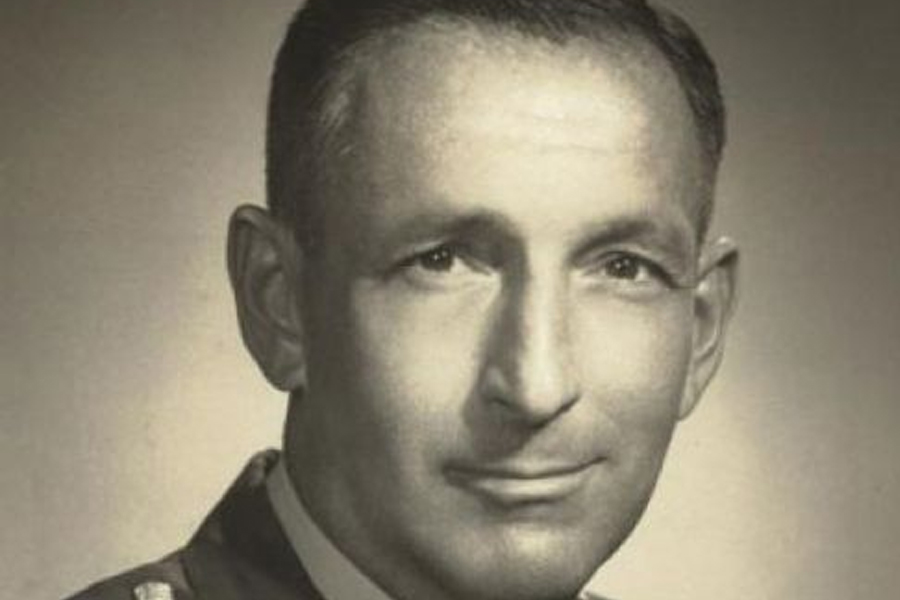
A Soldier Built by War and Discipline
I think of Melvin Garten as the kind of man whose life moved like a hard-fired blade, tested again and again, then trusted in the fiercest conditions. Born on May 20, 1921, in New York City, he came of age in an America that would soon be pulled into global war. He studied at City College of New York, then entered Army life as a paratrooper during World War II. That choice alone says a great deal. Paratroopers lived at the edge of fear and duty, dropped into danger from the sky, carrying both nerves and purpose. Melvin Garten belonged to that world.
His service stretched across World War II, Korea, and Vietnam, which is rare even among military careers. He was not simply present in these conflicts. He was recognized for leadership, courage, and endurance under fire. He survived wounds, hardship, and long separation from family. By the time he retired in 1968 as a lieutenant colonel, his record had become one of the most decorated in the Army. His life reads like a command history, but it also feels personal, shaped by endurance, sacrifice, and the quiet labor of returning home and building a life afterward.
Military Service and Achievements
Melvin Garten took risks and acted often during the war. He participated in the Los Baños rescue during World War II, a significant airborne mission. That mission was a dark lightning strike to release civilians from captivity. It captured airborne warfare’s speed, precision, and determination to go into danger.
His gallantry was further documented in Korea. He received the Distinguished Service Cross for leading troops under fire near Surang-ni on October 30, 1952. Not a typical decoration. Bravery and leadership above average are shown. He apparently rallied pinned-down men, reorganized them, and advanced the mission as danger approached. I remember the vision. A man who didn’t let anarchy win.
Vietnam made things worse. A mine injured him and put him in a coma while commanding the 2d Battalion, 327th Infantry, 101st Airborne Division in 1966. However, his military service continued. He later led staff, notably as Fort Bragg Chief of Staff. His honors were the Distinguished Service Cross, three Silver Stars, four Bronze Stars, five Purple Hearts, the Legion of Merit, two Joint Commendation Medals, and two Air Medals. Each medal is a little metal summation of peril and obligation. They tell a life story through action.
The University of Tampa employed him to teach history and politics after his 1968 retirement. I care about that change. It depicts a man who taught from battlefield experience. The soldier taught. The man who survived smoke and shellfire helped children understand history.
Ruth Engelman Garten, the Center of the Home
If Melvin’s life was defined by war and service, Ruth Engelman Garten gave the story its human gravity. They married in 1942, and their marriage lasted about 70 years. That is not just a long marriage. It is a structure built to survive distance, injury, and fear. I picture Ruth as the steady beam in a house shaken by storms. When Melvin was away, she held the household together. When telegrams came with bad news, she received them. When the family moved, she adapted. When the war years stretched on, she waited.
She died in 2013, and the family later described her as the one who kept everything moving. She and Melvin raised two sons, Allan and Jeffrey, and they built a family life that continued long after the wartime years had passed. Ruth was buried at Arlington National Cemetery, a quiet but powerful sign of shared service and shared endurance. Her story is not separate from Melvin’s. It is the frame that allowed his to stand.
Allan Garten, the Public Servant
Allan Garten, one of Melvin and Ruth’s sons, was identified publicly as Allan of Portland, with Pam named as his spouse. He became a retired federal prosecutor and spent a long career in the Oregon U.S. Attorney’s Office. That career feels like a continuation of the family’s public spirit. His work was not on a battlefield, but it still belonged to the world of justice, evidence, and consequence.
I see Allan as the son who took the family discipline and translated it into law. Military life demands structure, and so does prosecution. Both require focus, patience, and a strong sense of responsibility. Allan’s career suggests a family culture that valued service, seriousness, and intellectual rigor. He and his wife Pam are part of the family picture that extends beyond the wartime generation into civic life.
Jeffrey Garten, the Scholar and Leader
The other son, Jeffrey Garten, became famous. Jeffrey was from East Hampton, New York, and his wife was Ina. His public service included economics, government, business, and academia. After serving as Under Secretary of Commerce for International Trade, he became Dean Emeritus of Yale School of Management. That trajectory is remarkable.
Allan represented the family’s legal and public service legacy, while Jeffrey represented its intellectual and policy legacy. He attended institutes that shape action. His trade and management experience suggests a capacity to see systems, markets, and national priorities at scale. Jeffrey’s achievements felt like analysis-based command in a military-oriented household.
Sister, Descendants, and Family Continuity
Melvin Garten also had a sister, Shirley Maslow, who lived in New York City. She appears in the family record as part of the older generation’s continuing circle of kin. Her presence reminds me that family stories are never only about spouses and children. They are webs, with siblings, grandchildren, and later generations all carrying pieces of the same memory.
The obituary also noted two granddaughters and two great-granddaughters in Portland. Their names were not publicly listed, but their existence matters. They represent the quiet continuation of a family line that passed through war, marriage, teaching, law, and public service. In that sense, the family story stretches like a river beyond the visible map. What is named publicly is only the bank. What flows beyond it is larger.
Timeline of a Life That Spanned Three Wars
| Date | Event |
|---|---|
| May 20, 1921 | Born in New York City |
| 1942 | Married Ruth Engelman |
| 1940s | Served as a paratrooper in World War II and took part in the Los Baños rescue |
| 1952 | Distinguished Service Cross action in Korea |
| 1955 | Wrote about the Fort Bragg NCO Academy |
| 1966 | Severely wounded in Vietnam |
| 1968 | Retired as a lieutenant colonel |
| After 1968 | Taught history and political science at the University of Tampa |
| 2000 | Moved to Oregon near family |
| 2013 | Ruth Garten died |
| May 2, 2015 | Melvin Garten died in Lake Oswego, Oregon |
FAQ
Who was Melvin Garten?
Melvin Garten was an American Army officer, paratrooper, war veteran, teacher, husband, father, and one of the most decorated soldiers of his generation. He served in World War II, Korea, and Vietnam, then taught at the University of Tampa after retiring from the Army.
Who was Melvin Garten’s wife?
His wife was Ruth Engelman Garten. They married in 1942 and remained married for about 70 years. She played a central role in holding the family together during years of military service, injury, and long separation.
Who were Melvin Garten’s children?
His sons were Allan Garten and Jeffrey Garten. Allan became a federal prosecutor in Portland. Jeffrey became an economist, author, government official, and academic leader.
Did Melvin Garten have other close family members mentioned publicly?
Yes. Public notices also name his sister, Shirley Maslow, along with granddaughters and great-granddaughters in Portland. Their names were not publicly listed in the material I reviewed.
What made Melvin Garten notable in military history?
He stood out for his service across three wars, his role in the Los Baños rescue, his Distinguished Service Cross in Korea, and his severe wounds in Vietnam. His record reflects unusual persistence and bravery across decades of conflict.
What did Melvin Garten do after the Army?
After retiring in 1968, he taught history and political science at the University of Tampa. That later chapter gave his life a different kind of weight, shifting from command to education while keeping the same seriousness of purpose.